
You don't remember what happened. You remember the last time you remembered it
Have you ever had a family argument about “how it really happened”? Maybe nobody was lying. Every time we remember something, the brain doesn't pull the memory out of a drawer: it rebuilds it, and sometimes rewrites it.
Translated from Romanian. Read the original

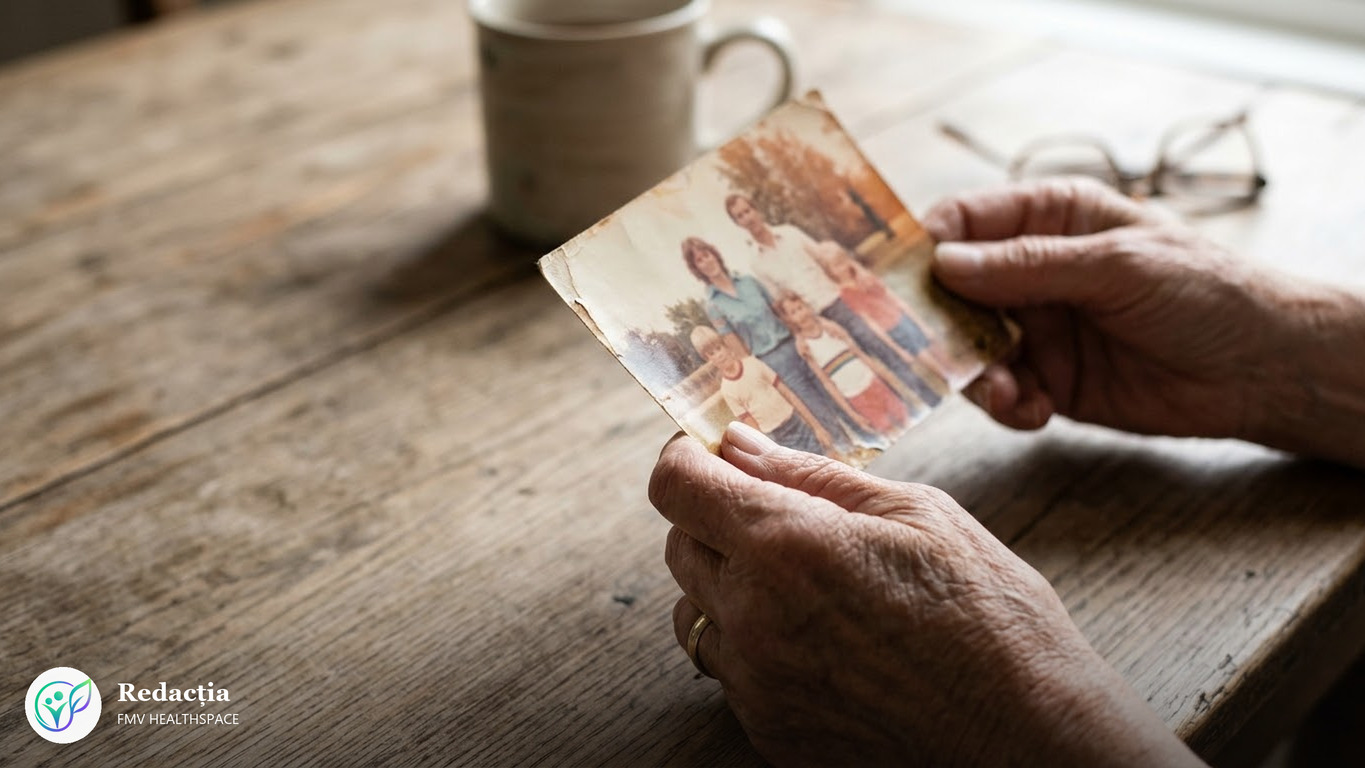
It was a holiday evening. At the table, someone starts telling a childhood story: the seaside holiday, the day the dog got lost, an aunt's wedding. And, as always, someone jumps in: “No, that's not how it was! We were at our grandparents', not at home.” Laughter follows, then a little irritation. Everyone is sure they're right.
If you've lived through an evening like that, one thing may reassure you: most likely, nobody at the table was lying. But it may also be that nobody was entirely right.
The memories we're most sure of
We all have a few memories that seem “burned” into our minds. We know exactly where we were when we heard some big news, who was next to us, whether it was raining, what we could smell. Psychologists call them flashbulb memories, because they seem to have been photographed.
In January 1986, the American space shuttle Challenger exploded shortly after launch, watched by millions of people. The next day, psychologists Ulric Neisser and Nicole Harsch asked a group of students to write down how they had heard the news.
About two and a half years later, they asked them again. Many of the stories had changed. For one student in four, all the important details were different: a different place, different people, a different way of finding out. And yet many were very sure of what they were recounting now. When they were shown what they themselves had written back then, some stuck with the new version.
Certainty is a feeling, not proof
After the attacks of 11 September 2001, researchers Jennifer Talarico and David Rubin did something simple and ingenious. They asked a group of students to write down two things: how they had heard about the attack, and an ordinary event from those same days, such as a party or a trip to the shop. Then they asked them again, a few weeks or months later.
Both memories had changed by about the same amount. The difference was in confidence. About the ordinary day, people honestly said “I don't remember exactly any more”. About 9/11, they felt just as sure as they had at the start.
A memory feels true to us because we feel it intensely, not because it is more accurate.
What the brain does when you remember
For a long time it was believed that a memory, once fixed, stayed fixed, like a photograph placed in an album. In 2000, an experiment changed the way we see things.
Researchers Karim Nader, Glenn Schafe and Joseph LeDoux taught some rats to fear a particular sound. A day later, and in other trials even two weeks later, they played the sound again to bring the memory back. Immediately afterwards, in an area of the brain called the amygdala, they briefly blocked the mechanism by which cells “save” a memory. The second time round, the fear had almost disappeared.
The conclusion surprised even them: when we remember something, the memory becomes fragile again for a while and has to be saved once more. The phenomenon is called reconsolidation. And what we're experiencing at that moment (how we feel, what new things we learn, the words we tell the story with) can slip into the version that gets saved.
You don't necessarily remember what happened. You remember the last time you remembered it.
A single word can change what you “saw”
Psychologist Elizabeth Loftus spent much of her career studying how easily memory can be shaped. In a 1974 study with John Palmer, she showed people footage of a car accident. Then she asked them how fast the cars were going when they “hit” each other or, for another group, when they “smashed” into each other.
Only the word was different. Those who had heard “smashed” estimated higher speeds. A week later, more than twice as many of them remembered broken glass on the ground. There was no broken glass in the footage.
Years later, Loftus went further. A group of adults were given a few stories from their childhood to read, supposedly told by relatives. One was made up: that they had got lost in a shopping centre when they were little. About one in four came to remember, partly or fully, that day which never happened.
So can we still trust our own memory?
Yes, and that's important to say. Memory holds on to the essentials well: what broadly happened, who was there, what it meant to us. What slips are the details, and especially the ones we're most sure of.
And the fact that memory rewrites itself isn't a flaw. It's the very reason we can learn, change our minds and move on from things. A memory that never shifted at all couldn't take in anything new. Researchers are now studying whether reconsolidation might help people living with painful memories. The field is still in its early days, though, and any such approach should only be undertaken with a specialist.
What you can take away from this
Picture a family meal. Someone starts telling a story from ten years ago. You remember perfectly that it was summer, that everyone was laughing and that it was one of the best days ever.
But your sister contradicts you. She says it was autumn and that, actually, you had an argument that day.
And suddenly, everyone is trying to prove they remember it right.
But what if you're both right, at least about what you felt? You held on to the laughter. She held on to the argument. The same day, two different memories.
Maybe the next time someone you love remembers something differently, you don't have to rush to correct them. Ask them what else they remember. You might discover a part of the story you had forgotten.
And if there are moments you want to keep, write a few lines about them. Take a photo. Note down a detail that made you smile. Years from now, the little things can become the most precious.
And try to look more gently at the memories that still hurt. You can't change what happened, but sometimes, as time passes, you can come to understand what you lived through differently.
We don't always remember things exactly as they happened. But that doesn't mean other people's memories are any less true for them. Sometimes it's worth listening to their story too, not just defending our own version.
Because sometimes, behind a simple “That's not how it was!”, there are two people who lived through the same day but went home with different stories.
This article is for information only and does not replace a consultation with a specialist. If a memory weighs on you or affects your daily life, a psychologist or psychotherapist can help.
Sources
- Neisser, U., & Harsch, N. (1992). Phantom flashbulbs: False recollections of hearing the news about Challenger. In E. Winograd & U. Neisser (Eds.), Affect and accuracy in recall: Studies of “flashbulb” memories (pp. 9–31). Cambridge University Press.
- Talarico, J. M., & Rubin, D. C. (2003). Confidence, not consistency, characterizes flashbulb memories. Psychological Science, 14(5), 455–461. doi.org/10.1111/1467-9280.02453
- Nader, K., Schafe, G. E., & LeDoux, J. E. (2000). Fear memories require protein synthesis in the amygdala for reconsolidation after retrieval. Nature, 406, 722–726. doi.org/10.1038/35021052
- Loftus, E. F., & Palmer, J. C. (1974). Reconstruction of automobile destruction: An example of the interaction between language and memory. Journal of Verbal Learning and Verbal Behavior, 13(5), 585–589. doi.org/10.1016/S0022-5371(74)80011-3
- Loftus, E. F., & Pickrell, J. E. (1995). The formation of false memories. Psychiatric Annals, 25(12), 720–725. doi.org/10.3928/0048-5713-19951201-07
Get the next article by email
Written by the newsroom and by the platform's verified specialists.
A few emails a month, no ads. Unsubscribe in one click, any time.
Comments
Sign in to comment. Reading is open to anyone.
No comments yet. You could be the first.